
Indian stock markets tumbled sharply with the Sensex falling 800 points and nearly 4 lakh crore wiped out in a single session. Here are the 6 key factors, including rupee weakness and global cues, behind the crash.

Indian equity investors experienced a significant loss of 16.32 lakh crore due to a two-day stock market decline fueled by escalating geopolitical tensions involving the US, Israel, and Iran.
Indian stock markets tumbled sharply with the Sensex falling 800 points and nearly 4 lakh crore wiped out in a single session. Here are the 6 key factors, including rupee weakness and global cues, behind the crash.

'Once the market decides it wants to go up, it goes up -- no amount of bad news can really hold it back.'

Indian benchmark indices Sensex and Nifty rebounded in early trade, recovering from previous losses, driven by softening crude oil prices and renewed buying interest in blue-chip stocks. Analysts note that the fall in Brent crude below USD 77 has removed significant macro headwinds for India, contributing to market stability.
Indian stock market indices Sensex and Nifty experienced a significant decline, driven by rising crude oil prices, sustained foreign fund outflows, and selling pressure in major bank stocks.

A US military Apache attack helicopter crashed near the Strait of Hormuz, with its crew successfully rescued, as US President Donald Trump confidently declared an imminent 'total victory' over Iran within two weeks and a new nuclear deal, despite ongoing regional volatility and a recent de-escalation between Iran and Israel.
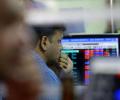
Indian stock market benchmark indices Sensex and Nifty experienced a significant drop in early trade due to rising crude oil prices, bearish global market trends, and continuous foreign fund outflows.
Indian benchmark equity indices, Sensex and Nifty, closed lower due to investor caution over rising bond yields, a weaker rupee, and fresh fuel price hikes, which have revived inflation concerns.

Sensex plunges over 1,400 points and Nifty slips near 22,250 amid Trump's Iran threat, rising crude oil prices, and FII selling. Here are the key reasons behind today's market crash.
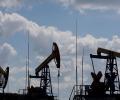
Global energy markets saw a significant correction as oil prices nosedived following Iran's announcement that the Strait of Hormuz has been fully reopened, dismantling the 'war-risk' premium that had gripped the market.

The Indian rupee plummeted to a new all-time closing low of 95.81 against the US dollar, driven by surging crude oil prices, persistent inflation concerns, and a strengthening dollar index.

Is the current rally telegraphing a durable peace plan in West Asia, boosted by United States (US) President Donald Trump's incoherent and contradictory posts on social media?

A fall in the Nifty 50 to around 19,000 is not impossible, but that would likely require nuclear options to be exercised.

Indian equity benchmark indices Sensex and Nifty surged significantly in early trade, mirroring a global market rally and a drop in crude oil prices below USD 100 per barrel, driven by renewed hopes of diplomatic engagement between the US and Iran.

The Indian rupee plummeted to an all-time low of 95.80 against the US dollar, settling at 95.66, driven by elevated crude oil prices and escalating geopolitical tensions in West Asia, despite potential RBI intervention and import curbs on gold.

Analysts predict that the ongoing US-Iran conflict, fluctuations in crude oil prices, and foreign institutional investor (FII) flows will be the primary factors influencing Dalal Street this week, with inflation concerns adding to investor anxiety.

Two US Navy EA-18G Growler jets collided mid-air during an air show at Mountain Home Air Force Base in Idaho, with all four crew members ejecting safely before the aircraft crashed.

Despite the World Cup returning to their country for the first time in four decades, many in Mexico said they feel excluded, priced out of stadiums, forced to pay for expensive TV subscriptions and constrained by strict licensing rules.
Indian markets on Dalal Street rallied sharply as easing tensions in the US-Iran conflict and stable oil prices boosted sentiment. Track Nifty 50 and BSE Sensex performance and key global triggers.

A jeweller in Beed district was allegedly assaulted and robbed of Rs 3 lakh by fraudsters who promised to sell him gold biscuits smuggled from Dubai. Two suspects were arrested after their motorcycle crashed during their escape, while others remain at large.

The start of the West Asia conflict has led to a sharp increase in crude-linked raw material prices, pushing up the price of helmets across the country.

Do not exit in panic or buy falling stocks without reassessing fundamentals; instead, build a watchlist and invest gradually with a disciplined, long-term approach.

Retail investors have been the hardest hit in the recent market downturn, with stocks where they hold over 20% falling 45% from their 52-week highs.

History is rarely decided by who has the biggest weapons, but by who has the better process. The same rule applies to investing, says Ramalingam Kalirajan.

Do not get trapped in the fear-and-greed cycle. Let time and discipline do the heavy lifting, points out Harsh Roongta.

'Don't chase unrealistic expectations or compare yourself to social media transformations.' 'Focus on your health first, not just the number on the scale before the wedding.'

'You set up your SIPs and you do not touch them. Not during COVID, not during a war scare, not when your neighbour tells you the market is finished. You let the noise pass over you.' 'The beauty of this approach is that it does not require courage or conviction in the moment. It just requires inertia -- keep the SIP running and do not look at your portfolio too often.'

Steven Spielberg's latest sci-fi offering Disclosure Day attempts to blend political thriller elements with an alien narrative, but despite strong performances and moments of suspense, it ultimately leaves viewers with too many unanswered questions and a somewhat unearned climax laments Sreeju Sudhakaran.

Following the exit poll prediction of a resounding BJP victory, BSE benchmark Sensex shot up on Monday by 2,507 points or 3.4 percent to settle at a new closing peak of 76,469. However, a day later on Tuesday, the equity markets witnessed a bloodbath, with the Sensex tanking 4,390 points or 6 percent to settle at 72,079. This was the worst single-day fall in four years.

United States President Donald Trump on Sunday warned of new and significantly higher tariffs on Chinese goods if Beijing does not withdraw a recent 34 per cent retaliatory tariff hike, threatening to end all ongoing talks with China.

Liverpool have sacked manager Arne Slot after a disappointing second season where they failed to defend their Premier League title and missed out on Champions League qualification.
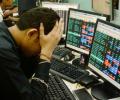
From the 30-share blue-chip pack, Tata Steel, NTPC, Kotak Mahindra Bank, IndusInd Bank, Power Grid, Zomato, Adani Ports, Asian Paints, Mahindra & Mahindra and Reliance Industries were among the biggest laggards. Titan and Sun Pharma were the only gainers.

Benchmark stock indices Sensex and Nifty dived sharply by nearly 2 per cent on Sunday after Finance Minister Nirmala Sitharaman proposed a hike in the Securities Transaction Tax (STT) on derivatives. Reversing the early gains, the 30-share BSE Sensex plunged sharply by 2,370.36 points or 2.88 per cent to slide below the 80,000-mark at 79,899.42 in afternoon trade as the finance minister announced a hike in STT on futures contracts to 0.05 per cent from the current 0.02 per cent.

He alleged that besides Modi and Shah, Finance Minister Nirmala Sitharaman had also commented on the stock markets ahead of elections, which has never happened in the past.

'Portfolios built in these phases often deliver the strongest outcomes over time.'

Dalal Street investors were a poorer lot on Monday as their wealth eroded sharply by Rs 14 lakh crore following a sharp decline in benchmark indices amid a global market meltdown due to recession fears. The 30-share BSE Sensex tumbled 2,226.79 points or 2.95 per cent to settle at 73,137.90. Intra-day, the benchmark slumped 3,939.68 points or 5.22 per cent to 71,425.01.

Indian equity markets experienced a significant downturn, with the Sensex and Nifty plummeting due to rising crude oil prices, geopolitical tensions in West Asia, and continuous foreign fund outflows.
'Portfolios built in these phases often deliver the strongest outcomes over time.'

In a falling market, the value of your investment keeps going down. However, the reduction in value is purely a notional loss if you remain invested. When you redeem in a falling market, the notional loss becomes a permanent loss, explains Anamika Pareek.
